Osmo Future School
I set out to make my vision for a virtual classroom become real, so I began working with Osmo, who wanted to develop a similar concept. Osmo specializes in creating educational games using AI and mix reality. Together we were taking our ideas to the next level.
Product Design, Research, Branding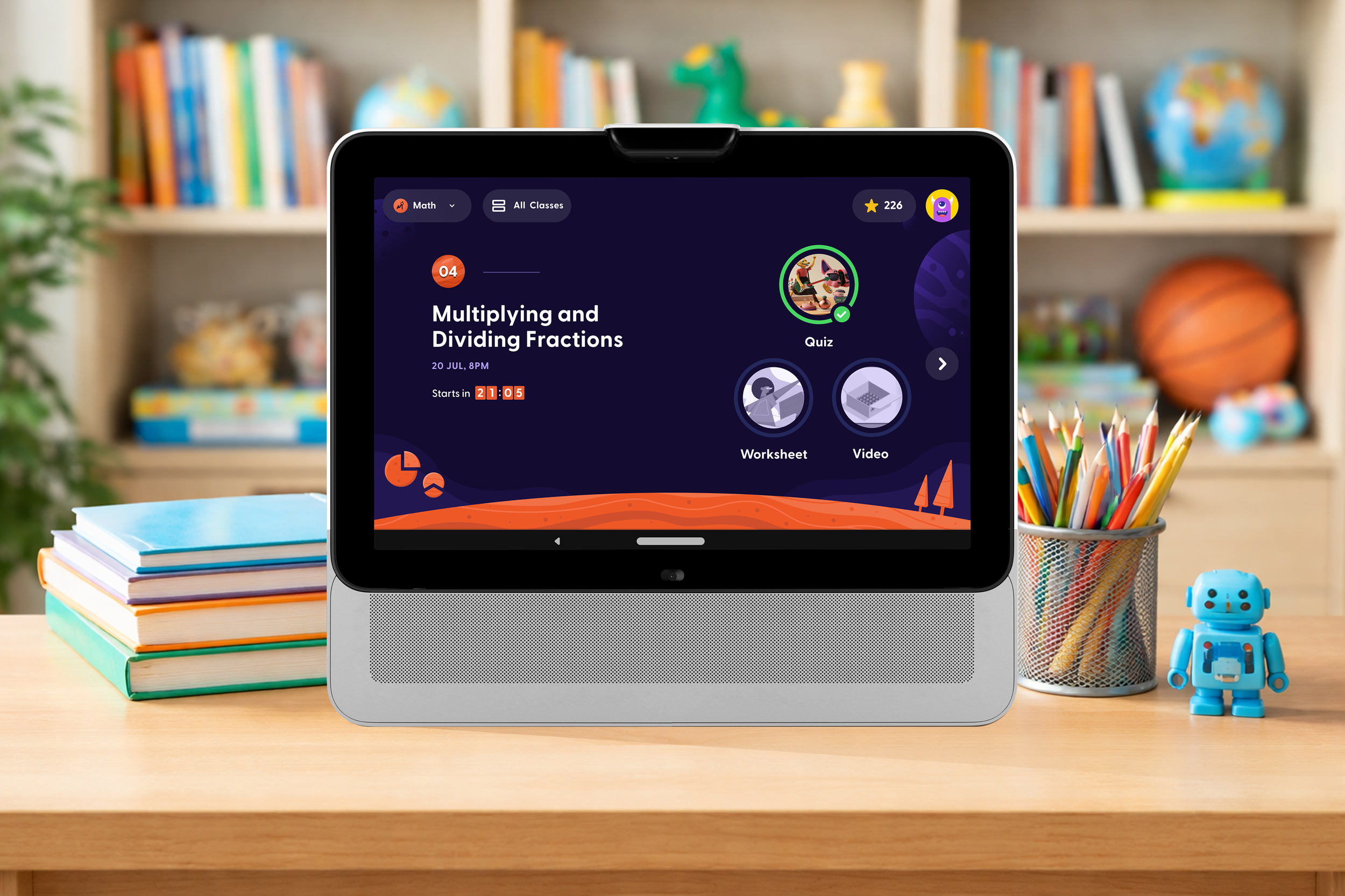
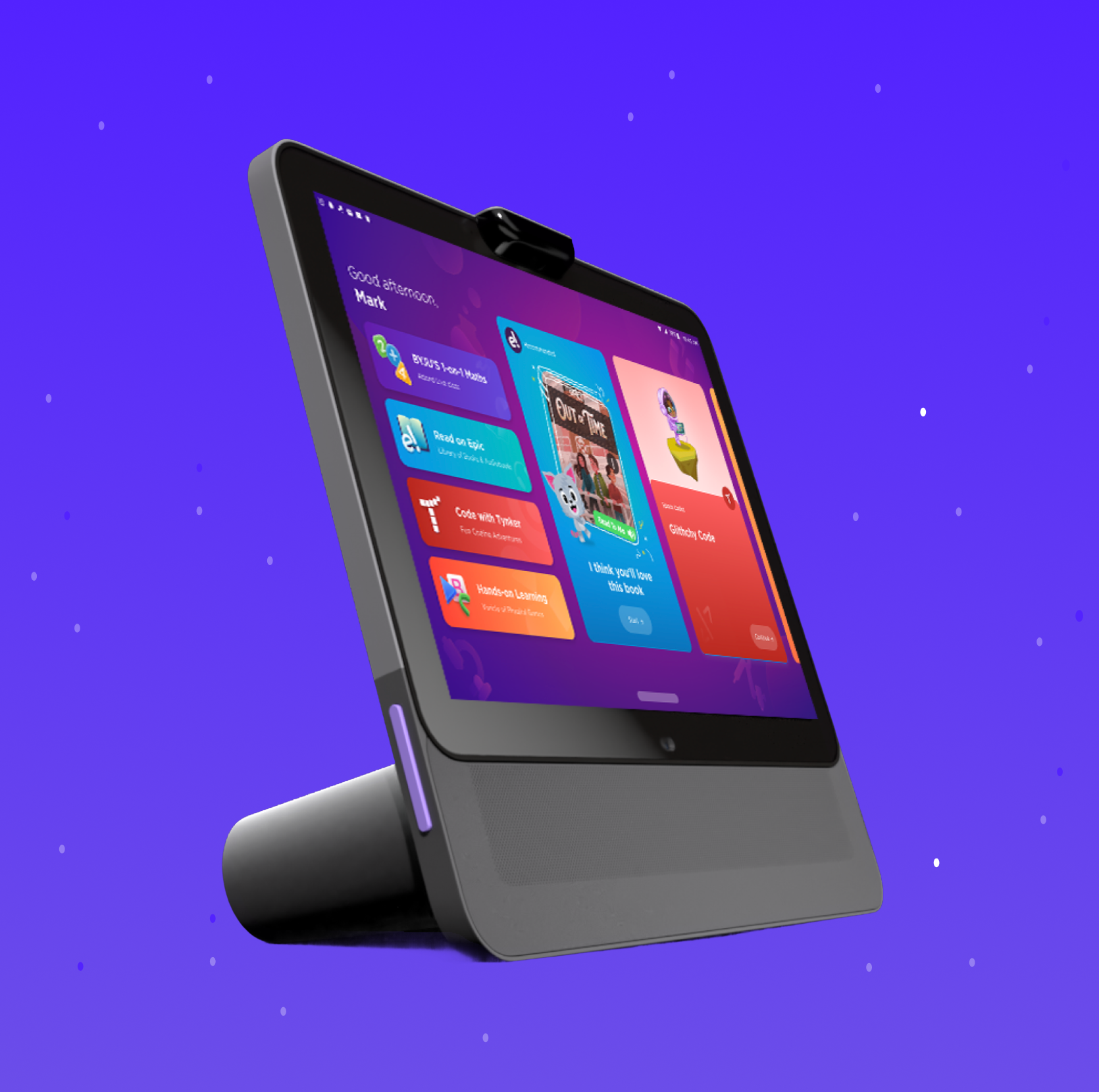
Introducing the LearnStation
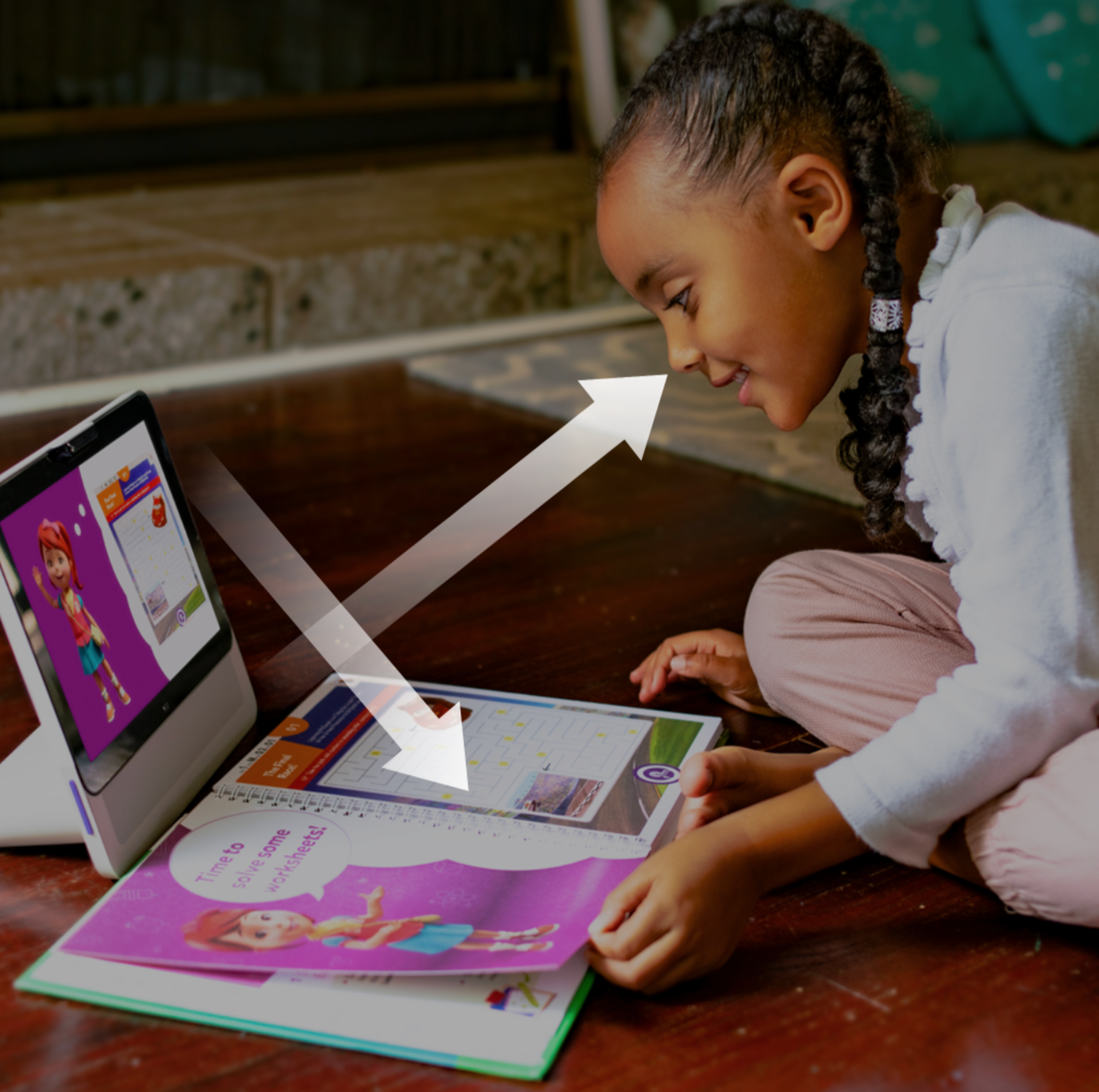
Osmo was working on a new device called the LearnStation, a mixed reality and AI product that produced fun and engaging educational experiences. It facilitated hands-on learning without having a physical person around, so kids could write, draw, and build with their hands. This device could read their movements, evaluate creations, and see how kids were solving problems in real-time.
I owned the experience for the Future School product for this device. This product combined those capabilities with a virtual classroom, so kids could interact and learn with a human teacher and kids around the globe.
Branding a kid’s experience
Creating a brand for kids is a humbling experience. I started from scratch with research and concept testing, receiving the harshest and most hilarious critiques I have ever received from kids ages 8-13. Gotta love a kid’s honesty!
From there, I created Future School’s first design system, which was space themed. Choosing colors, fonts, and creating styles that could balance the preferences of young children to tweens. I created the tone to be playful, kinetic, and loud.
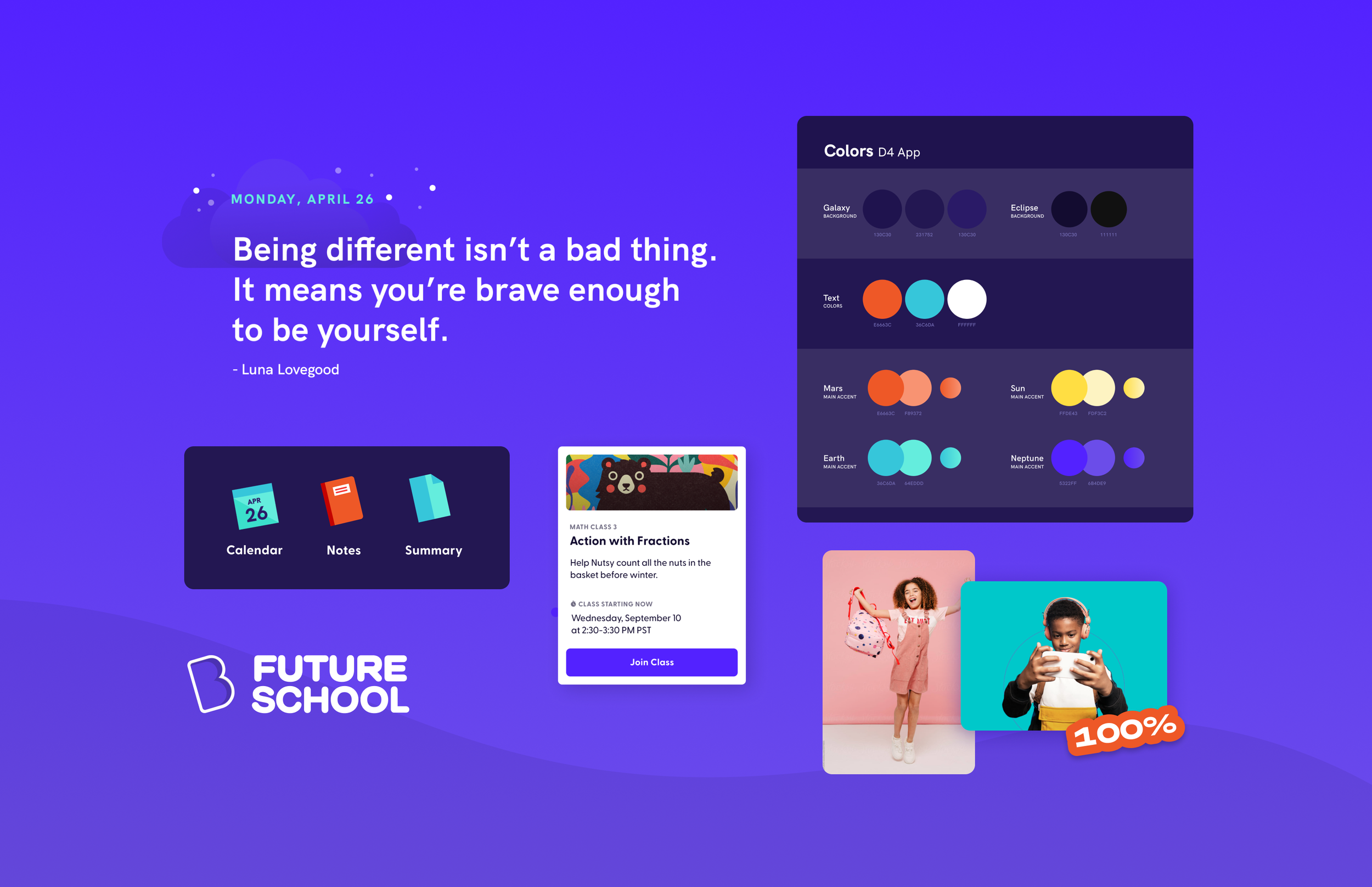
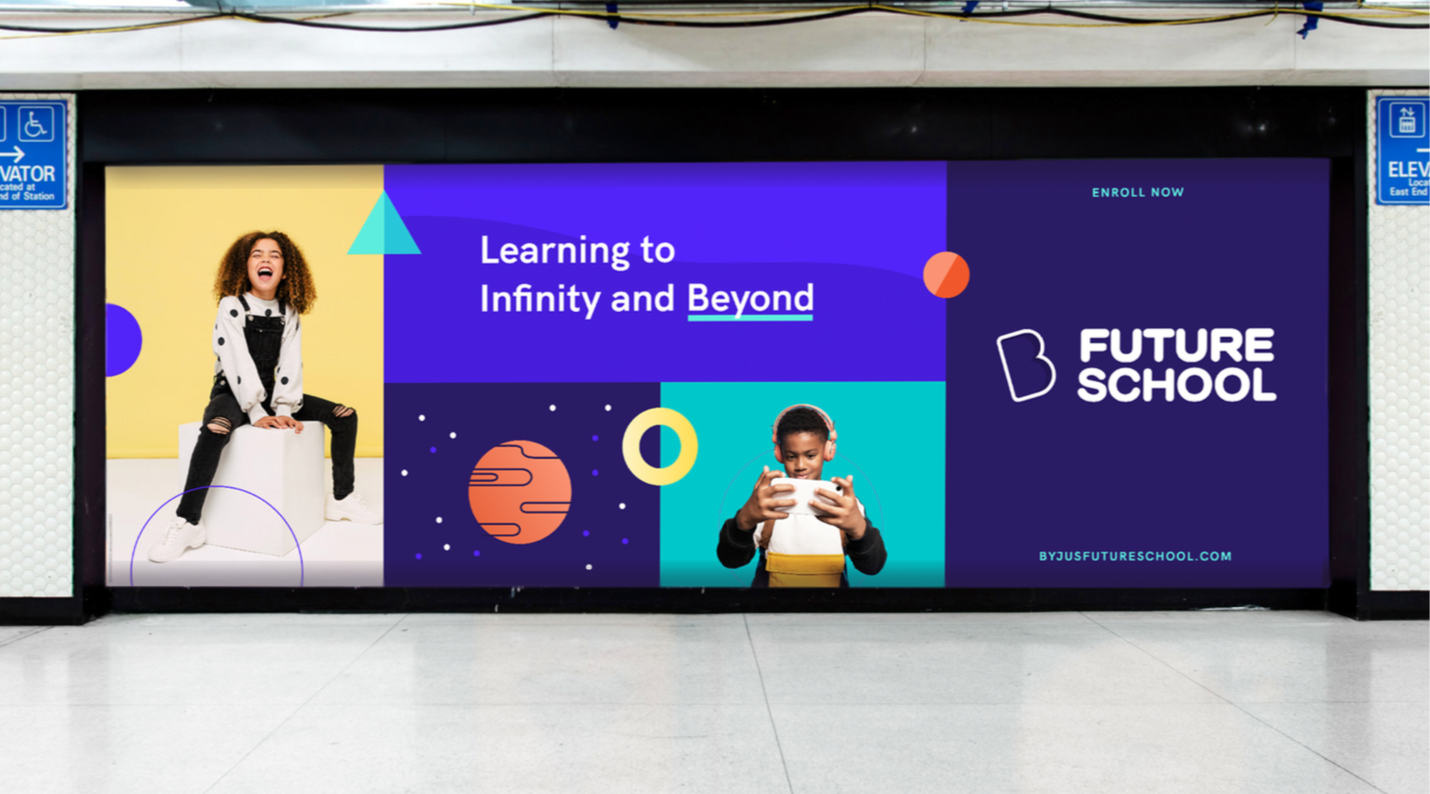
This branding extended past the product design ecosystem. It established marketing applications and the physical products.
I pitched the marketing concepts to show how this brand could be applied to a full Future School Experience.
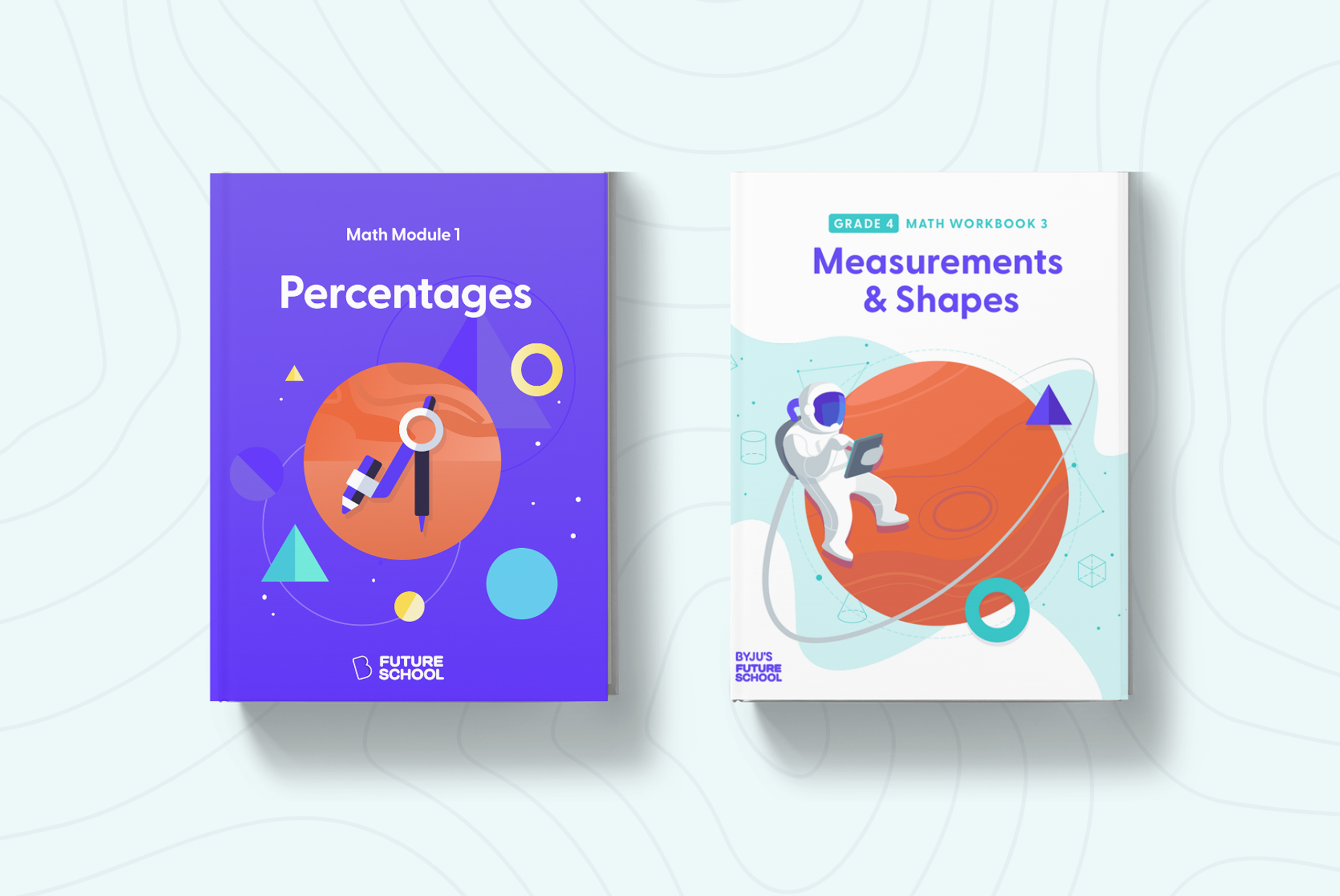
I also art directed and worked with an illustrator to develop the workbook covers, so that it scaled to several subjects, topics, and grade levels.
A classroom experience like no other
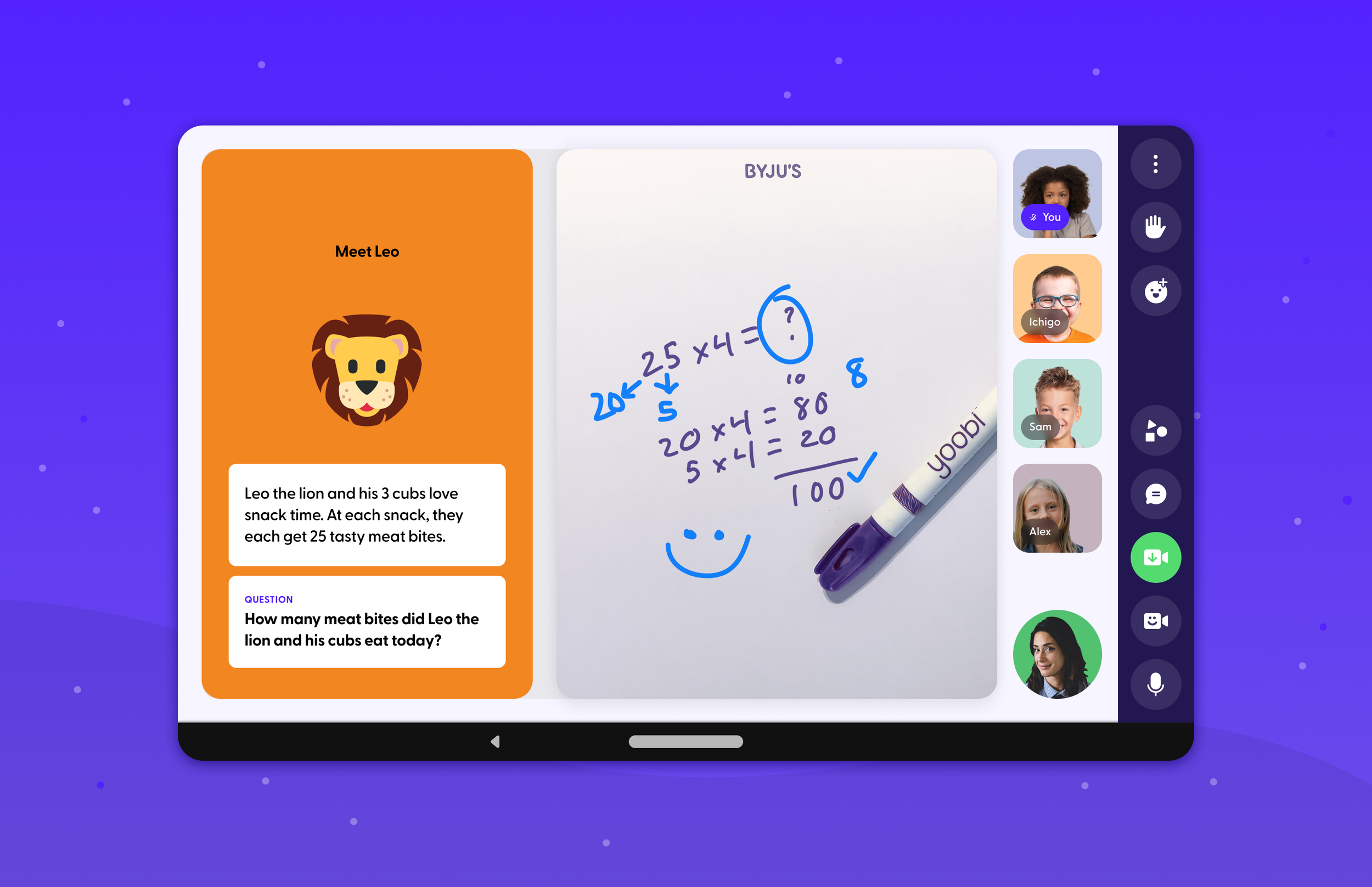
A student of Future School would open their LearnStation, be greeted by their teacher & peers, and participate in an interactive lesson. In this lesson, they could see the teacher work through problems, share their own work in-real time, and high five their fellow-classmates!
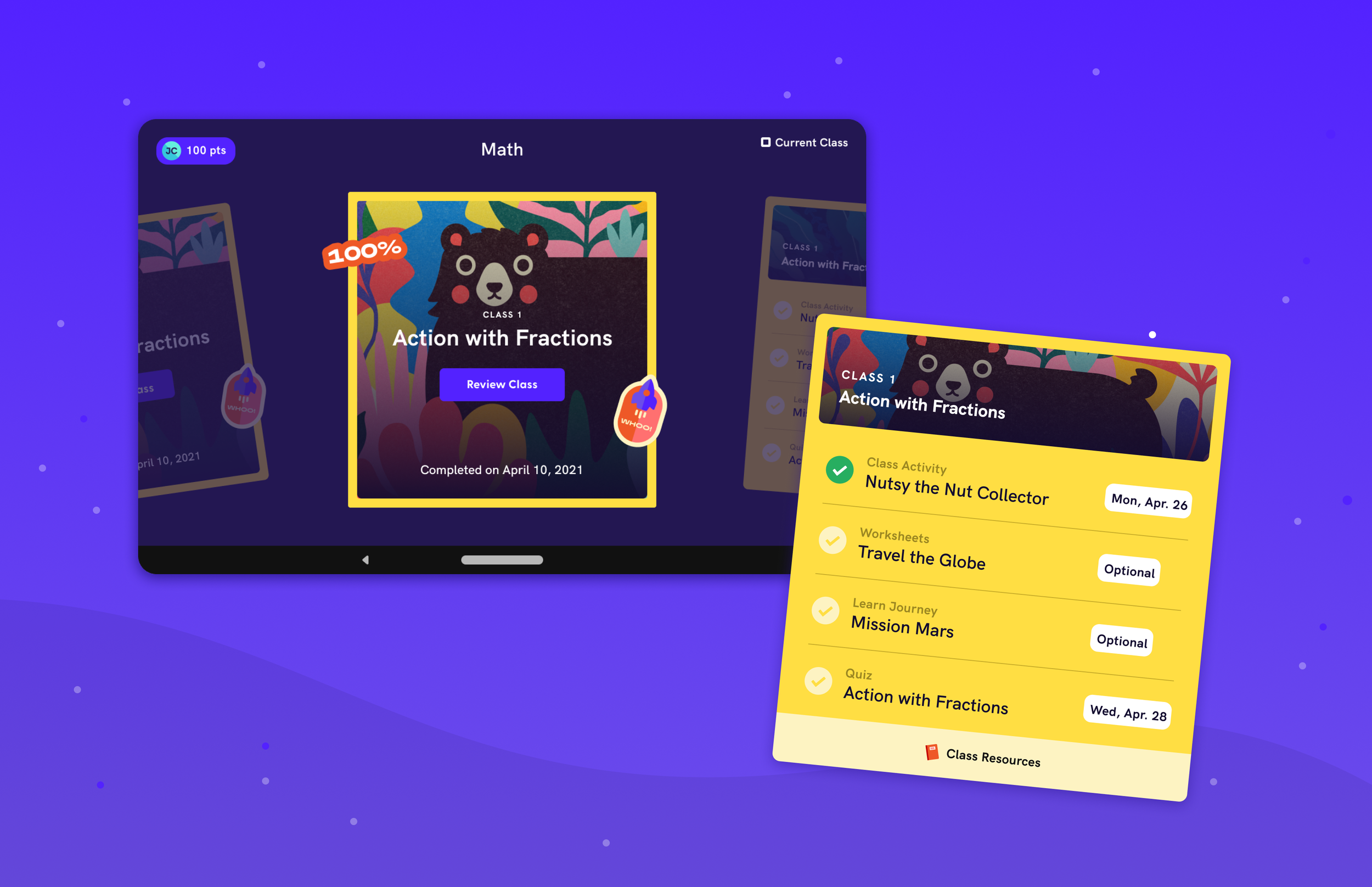
After class, they could play with supplemental activities to help master the concepts they learned together.